
October 3, 2026
Is Age Really the Problem?
Maybe the best answer isn’t age or term limits. It’s welcoming competition.
I think we’ve all seen the recent images of an elderly member of Congress being wheeled through the Capitol, or watched an interview or hearing that left us wondering whether a lawmaker was still fully capable of doing their job. Our current president and his predecessor both celebrated their 80th birthdays while serving in the White House. And in just the last few years, multiple members of Congress have died in office at advanced ages.
For several election cycles now, Americans have been asking some version of the same uncomfortable question: How old is too old to hold the most powerful jobs in the country?
Today, *27 members of Congress are 80 or older: 18 Democrats, seven Republicans and two independents.
Congress has always had older members, but something has changed: we see much more of them now.
Social media, independent journalism and near-constant video access have given Americans a window into our lawmakers that previous generations simply didn’t have. We see hearings, hallway interviews, and press conferences in real time, and sometimes what we see raises legitimate questions about whether someone remains capable of doing an extraordinarily demanding job.
So, do we need age limits? Term limits? Or would these issues self-correct if we simply started taking primary elections seriously?
Age and competence are not the same thing; we all know people in their 80s who are extraordinarily sharp. Some older members of Congress can still run circles around people half their age, and their experience matters enormously in legislating, negotiating, and understanding an institution as complicated as Congress. If you’re 99 years old and still sharp, engaged and capable, why shouldn’t voters be allowed to choose you? Older Americans deserve representatives who understand their experiences, too. The problem isn’t age.
The problem is when voters aren’t given meaningful opportunities to decide whether someone is still the best person for the job.
Each member of the House represents roughly three-quarters of a million people. Surely, among that many citizens, an incumbent should have to demonstrate that he or she remains the strongest candidate available- that among nearly a million people, they’re still the absolute best for the job. Instead, incumbency becomes its own protection.
Political parties claim to remain neutral during primaries, but neutrality has to mean more than simply withholding an official endorsement. For incumbents, parties still significantly tip the scales through financial support, access to campaign resources and voter data, relationships with donors and consultants, or by throwing their “unofficial” weight behind the candidate favored by influential party leaders and kingmakers. At times, party organizations have even discouraged or blacklisted vendors from working with primary challengers. A party should not be able to claim neutrality while working behind the scenes to make sure the playing field is anything but even. Maybe instead of fearing competition, political parties should learn to embrace it.
An important thing to remember is that these offices don’t belong to political parties, campaign committees, donors, or the people currently occupying them. They belong to us(!) and no elected office should be gatekept from the public. Democracy shouldn’t begin after political institutions have already narrowed the field, discouraged challengers, or decided whose turn it is. It should exist at every step of the process, including the primary, with political parties championing ideas and policies, not gatekeeping positions. Understand that any political institution that becomes more invested in protecting an officeholder than protecting meaningful competition deserves scrutiny.
We shouldn’t be easily convinced that term limits solve the problem either. They can remove excellent lawmakers precisely when their experience has become most valuable. And I certainly don’t want Washington deciding that 75, 80, or 85 is the age at which someone becomes incapable of representing me. Cognitive decline doesn’t happen on a birthday, and youth is hardly a guarantee of intelligence, judgment or effectiveness.
What I want is competition.
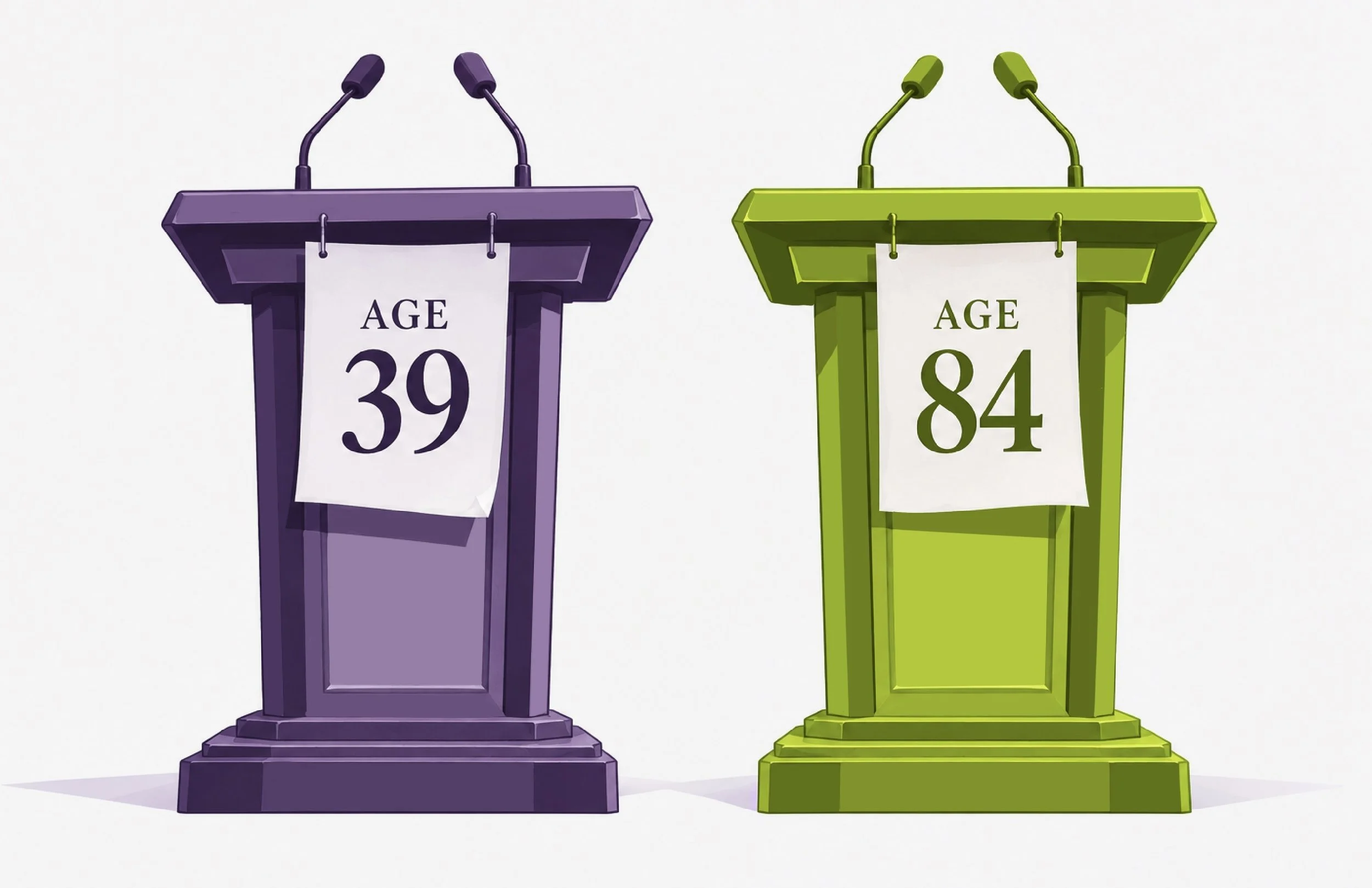
If you’re 82 years old and know you still have what it takes, welcome being primaried. Stand on a debate stage next to the 42-year-old who thinks they can do better. Answer difficult questions, defend your record, and show voters your command of the issues. Let the voters decide whether your experience outweighs the case for new leadership.
*Including Eleanor Holmes Norton, nonvoting delegate in the US House of Representatives representing Washington, D.C.


Subscribe